Everything has its own timing. Animals sleep when they are tired; they move when they need to. They move during certain times of the day, year, when they are hungry, and when they are in certain areas. It provides an interesting reminder that rest is not a time-waster, but the necessary part of maintaining balance, when you see these natural behaviors.
Neffie Jones may serve as a point of departure for considering gentle sleep and evening routines for those interested in developing healthier, more peaceful sleep patterns. Observation of the natural world can also be helpful when it comes to appreciating the importance of rest and a quiet environment.
The Natural World Runs on Rhythms
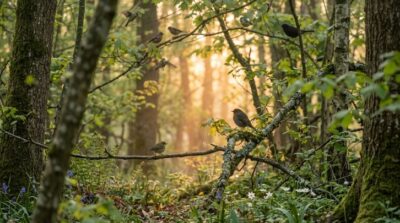 Wildlife has patterns that allow them to function in their environments, such as becoming active at sunrise or after dark.
1-The Different Sleep Patterns of Animals
All animals do not sleep in the same manner. Some species are active during the day, and others are active at night. Other animals sleep for shorter durations during 24 hours. These differences illustrate that it’s not an all-or-nothing experience when it comes to sleep.
Animals evolved patterns that are appropriate to their physical requirements and environment. There are also differences among humans in sleep preferences and sleep habits. But it is important to have a reasonably routine to make a clearer demarcation between work and sleep time.
2-Light Influences Activity
One of the most prominent indications in the environment is natural light. For many animals is an indication that conditions are changing and it is time to get active, whereas dark signifies a change in conditions. Light exposure also affects humans’ sleep patterns. Taking advantage of natural daylight during the day and establishing a more subdued and quiet environment at night can help make the distinction between day and night.
3-Animals and Rest
Wild animals spend considerable amounts of time resting. This can occur when they are fed, on a journey, hunting, playing, or protecting themselves.
Rest Supports Recovery
There is a time for resting and recuperating after exercise. The pressure to keep going and producing is often there. Nature has a different interpretation. Rest is not something animals must explain to themselves; they know they need it.
They rest because they need to. In other words, there is no excuse for not accepting responsibilities. Rather, there is an emphasis that there must be a recuperation period in order to sustain the activity.
1-Maintaining a More Natural Sleep Environment
It is possible to create a bedroom that more closely embodies the soothing characteristics of the natural world.
2-The Need for Safe Resting Places and Their Importance to Animals
Some animals select the location where they will sleep or rest. Environmental threats can be prevented if nests, burrows, dens, tree cavities, and sheltered places are provided. While the use of human bedrooms differs greatly from the use of a sleeping place in a bed, the concept of a reliable sleeping place remains applicable.
3-A Bedroom Should Feel Secure
One can similarly apply the same principle to minimizing unnecessary disruptions at night. Creating a tidy bedroom, muting any unnecessary notifications, and creating a regular bedtime routine can assist in producing a clearer shift towards sleep.
Activity and Recovery: Reconnected
Nature shows that sometimes working hard and resting go hand in hand.
1-Active Periods Need Recovery
After activity, there is rest as energy must be replenished. Much like humans, alternating periods of work and rest. Energy is needed for physical activity, household work, work, or socializing.
A lack of recovery may make it difficult for individuals to perform at a normal level.
2-Balance is the key to more than just constant activity.
They are influenced by food availability, temperature, daylight, and environmental conditions on their activity and resting behavior.
3-Winter and Longer Nights
A stable sleep environment can help to give stability even in a changing outside world. Routine is imperative for adaptation. Nature is adaptable.
Making Evening More Relaxed
There are no complicated techniques required to do a nature-inspired sleep. When sleeping, try to take it easy. Not animals, who don’t have the same constant flow of digital information that humans do. People can be spending their evenings flipping from message to video to social media to work to entertainment.
YOU MAY ALSO READ: How Nature and Animal Behavior Can Inspire Smarter Asset Searches
End Notes
Life does not speed up in any part of the day. Acts in a rhythm of activity, recovery, and change. Imitation of those rhythms can help people make room for rest and help to make the shift from day to night more peaceful.